Leather wallet Is a practical guide to types, materials, care, and buying tips
Leather wallet Is an everyday carry item made to organize cards, cash, identification, receipts, and small essentials while aging with regular use. A good leather wallet balances material quality, stitching, pocket layout, thickness, and care needs. The best choice depends on how much you carry, where you keep it, whether you prefer a slim card holder or a classic bifold, and how much maintenance you are willing to do.
Leather wallet shopping can feel simple until you compare the details. Two wallets may look similar on a shelf, yet one may be cut from durable full grain hide while another relies on corrected, coated, or bonded material that can peel. The difference matters because a wallet lives in a pocket, rubs against fabric, bends at the fold, absorbs hand oils, and gets opened many times a day. Leather wallet quality shows most clearly after months of use, not only on the first day.
Leather wallet design also has a personal side. Some people want a compact front pocket wallet that discourages carrying clutter. Others prefer a long travel wallet with a zip pocket, several card slots, and room for receipts. A daily wallet should fit the way you actually pay, commute, travel, and store identification. The goal is not to buy the thickest or most expensive option, but to choose construction and layout that match your routine.
What is Leather wallet?
Leather wallet is a small personal organizer made from animal hide or, in some modern cases, a leather alternative designed to imitate the feel and function of hide. Traditional versions use cowhide, calfskin, goatskin, sheepskin, or horsehide. The leather is cut, folded, stitched, and finished into pockets that hold cards and currency. Leather wallet styles include bifolds, trifolds, long wallets, card cases, money clip wallets, zip wallets, passport wallets, and minimalist sleeves.
Leather wallet appeal comes from durability and feel. Quality leather can soften, darken, and develop patina, which is the surface change that appears as oils, light, friction, and time interact with the hide. This is different from surface coating failure. Patina usually looks richer and more personal; peeling or flaking usually suggests a weak finish, bonded layers, or poor material selection. Leather wallet buyers often look for this distinction when trying to avoid replacing a wallet every year.
Leather wallet construction is usually simple, but the small details are important. Edges may be burnished, painted, folded, or left raw depending on the design. Stitching may be machine sewn or hand stitched. Card pockets can be stacked horizontally, arranged vertically, or shaped for quick access. A center cash slot may be open, divided, clipped, or zippered. Leather wallet usefulness depends on how all of these choices work together when the wallet is loaded.
How does a Leather wallet work in daily carry?
Leather wallet function begins with organization. Cards need enough friction to stay secure but not so much that every checkout becomes a struggle. Cash needs a pocket that keeps bills flat enough to use comfortably. Identification should be easy to reach without exposing every card. Leather wallet layouts solve these needs in different ways, which is why a slim sleeve can be excellent for one person and frustrating for another.
Leather wallet break-in is part of the experience. A new wallet may feel firm because the leather fibers and stitched seams have not relaxed around your card stack. Over the first few weeks, the pockets often shape themselves around what you carry. That does not mean you should overstuff it. Too many cards can stretch slots permanently, distort the fold, and make the wallet uncomfortable. In practice, a better Leather wallet often asks you to carry less, not more.
Leather wallet placement also affects comfort and wear. A back pocket wallet may curve over time from sitting, and a thick one can feel awkward during long drives or desk work. A front pocket wallet usually stays flatter, can be easier to monitor in crowded places, and may reduce pressure from sitting. A bag-carried wallet avoids pocket stress but may need a zipper or secure closure if it shares space with keys, pens, and cosmetics.
Which Leather wallet type fits your routine?
Leather wallet types should be compared by carry style rather than by appearance alone. A bifold is the familiar middle ground, with a fold, card slots, and a bill compartment. It works well for people who still carry cash and several cards. A trifold adds more compartments but can become bulky quickly. Leather wallet buyers who want a traditional shape should check thickness when loaded, not just when empty.
Leather wallet card holders are better for minimal carry. A card case usually has two to six slots and may include a center pocket for folded bills. It works well for contactless payments, office badges, transit cards, and a small number of essential bank cards. A front pocket wallet or slim sleeve can be a good choice when you want less bulk and a cleaner daily routine.
Leather wallet travel formats are larger. A long wallet can hold unfolded currency, boarding passes, receipts, and extra cards. A zip wallet adds security for coins, keys, or small items, though the zipper increases size. A passport wallet is useful for travel days but may be too large for everyday pants pockets. Leather wallet selection should account for the busiest day you expect, while still avoiding a design that is oversized for normal use.
- Bifold wallets suit balanced card and cash carry.
- Card holders suit slim front pocket carry.
- Zip wallets suit coins, receipts, and bag carry.
- Long wallets suit travel and unfolded bills.
- Money clip wallets suit quick cash access with fewer cards.
What leather materials should buyers understand?
Leather wallet material terms can be confusing because marketing language is not always precise. Full grain leather uses the outer layer of the hide and keeps the natural surface intact. It can show grain variation, scars, and texture, but it is often valued for strength and aging. Top grain leather is also from the upper hide, but the surface is usually sanded or corrected for a more uniform look. Both can be good, but they age differently.
Leather wallet shoppers should be careful with bonded leather. Bonded leather is made from leather fibers or scraps combined with binders and finished with a surface layer. It may look neat at first, but it is more likely to crack or peel under bending and pocket friction. Genuine leather is another term that can be vague. It means real leather, but it does not automatically mean the highest grade or best construction.
Leather wallet tannage affects character. Vegetable-tanned leather is processed with plant-based tannins and is known for firmness, structure, and pronounced patina. Chrome-tanned leather is common, flexible, and often softer from the start. Saffiano leather uses a pressed crosshatch texture and a protective finish that can resist scratches better than many smooth leathers. Nappa leather is soft and smooth, with a more supple hand. For a deeper material comparison, a guide to can help explain why surface integrity matters.
Leather wallet alternatives also exist. Some wallets use cactus-based, recycled, or synthetic materials for buyers who want a non-animal option. These materials can be practical, but they should be judged on their own performance rather than treated as identical to hide. A leather alternative may resist moisture well, while a traditional hide may develop a richer patina. The right choice depends on values, feel, longevity expectations, and care habits.
How can you judge Leather wallet quality before buying?
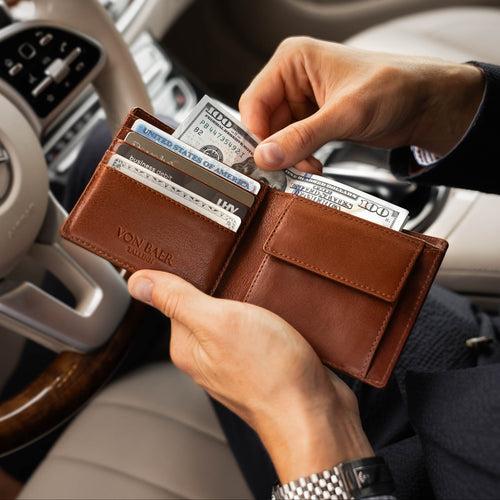
Leather wallet quality is easier to judge when you slow down and inspect construction. The leather should feel consistent for its type, with no plastic-like flaking at corners or folds. Edges should look intentional, whether burnished, painted, or folded. Stitching should be even and tight, especially at stress points near the fold and pocket openings. Card slots should be aligned, with enough clearance to insert and remove cards without tearing the edges.
Leather wallet smell is sometimes mentioned by buyers, but it should not be the only test. Natural leather often has a distinct scent, while heavy chemical or plastic odors can suggest coating or synthetic layers. Still, smell can vary by tannage and finishing, so it is only a clue. A better signal is how the wallet flexes. If the surface wrinkles naturally, that can be normal. If a shiny top layer separates or cracks sharply, that is a warning sign.
Leather wallet pricing should reflect materials, labor, design, and warranty support. Handmade wallets may cost more because cutting, skiving, stitching, and finishing take time. Mass-produced wallets can be excellent when the specifications are strong, but brand name alone is not proof of quality. Leather wallet buyers should read material descriptions carefully and look for clear information about hide type, lining, thread, edge finish, dimensions, and care instructions.
What are the benefits of a Leather wallet?
Leather wallet benefits are practical first. A well-made wallet protects cards from loose pocket wear, keeps payment items organized, and gives cash a consistent place. Leather is also pleasant to handle because it warms to the hand and can become more comfortable with use. Unlike some rigid metal holders, a Leather wallet can flex slightly while still maintaining shape when the construction is sound.
Leather wallet longevity is another major benefit. A high-quality wallet can last many years when it is not overloaded, soaked, or neglected. Over time, scratches and darkening can become part of the wallet's character rather than a reason to replace it. This is why many buyers prefer full grain or vegetable-tanned options: they want an object that improves visually instead of looking worn out quickly.
Leather wallet repairability can also matter. Stitching, edges, and linings may be repairable depending on the maker and construction. A simple hand-stitched wallet can sometimes be restitched more easily than a complex wallet with glued layers and synthetic inserts. Leather wallet owners who want long service should consider whether the maker offers repair guidance, replacement policies, or clear care support.
What risks and care mistakes should Leather wallet owners avoid?
Leather wallet care is mostly about restraint. Too much water, harsh cleaners, alcohol, bleach, ammonia, heavy oils, waxy polishes, and silicone products can damage finishes or discolor the hide. Baby wipes and household cleaners are not safe substitutes for leather care. If a Leather wallet gets dirty, use a soft dry cloth first. If light spot cleaning is needed, use minimal water and test a hidden area before touching a visible panel.
Leather wallet moisture exposure should be managed quickly. If the wallet gets wet, remove cards and cash, blot gently, reshape it, and let it air dry at room temperature. Do not use a hair dryer, heater, or direct sunlight, because fast heat can stiffen or warp leather. Once dry, a small amount of suitable conditioner may help some smooth leathers, but coated or textured finishes may not need it. A focused routine is better than frequent product use.
Leather wallet overloading is a common cause of damage. Stuffing every slot, doubling cards in pockets, and cramming receipts into the fold can stretch leather and strain stitching. Coins in a pocket not designed for coins can create pressure points. Sitting on a thick wallet every day can bend cards and distort the body. A good safety habit is to remove expired cards, old receipts, and rarely used items once a week.
Leather wallet security features deserve realistic expectations. RFID-blocking linings may help with certain contactless card concerns, but they do not replace normal caution. Keep the wallet in a secure pocket or bag, avoid leaving it visible in a vehicle, and carry only the cards you need. Leather wallet safety is mostly about habits: fewer items, better awareness, and quick cancellation steps if a card is lost.
How should you compare Leather wallet alternatives?
Leather wallet alternatives include nylon wallets, canvas wallets, aluminum card holders, carbon fiber cases, silicone sleeves, and phone wallet cases. Each solves a different problem. Metal card holders are rigid and slim, but they may not handle cash well and can feel cold or mechanical. Canvas is light and washable, but it may not age with the same depth. Phone wallets reduce what you carry, but they combine payment cards with the device most people use constantly.
Leather wallet comparison should include maintenance. Metal and synthetic wallets may need less care, while leather benefits from thoughtful handling. On the other hand, leather often wins on tactile quality, repair potential, and appearance after years of use. A Leather wallet is especially appealing when you want an accessory that can move from casual clothes to work settings without looking out of place.
Leather wallet choice can also be compared by carry philosophy. If you want the absolute thinnest setup, a two-slot card sleeve may be enough. If you carry cash every day, a bifold or money clip wallet is more practical. If you travel often, a long wallet or zip wallet can reduce loose documents. The best Leather wallet is the one that makes daily use easier without encouraging unnecessary clutter.
How do you choose a Leather wallet step by step?
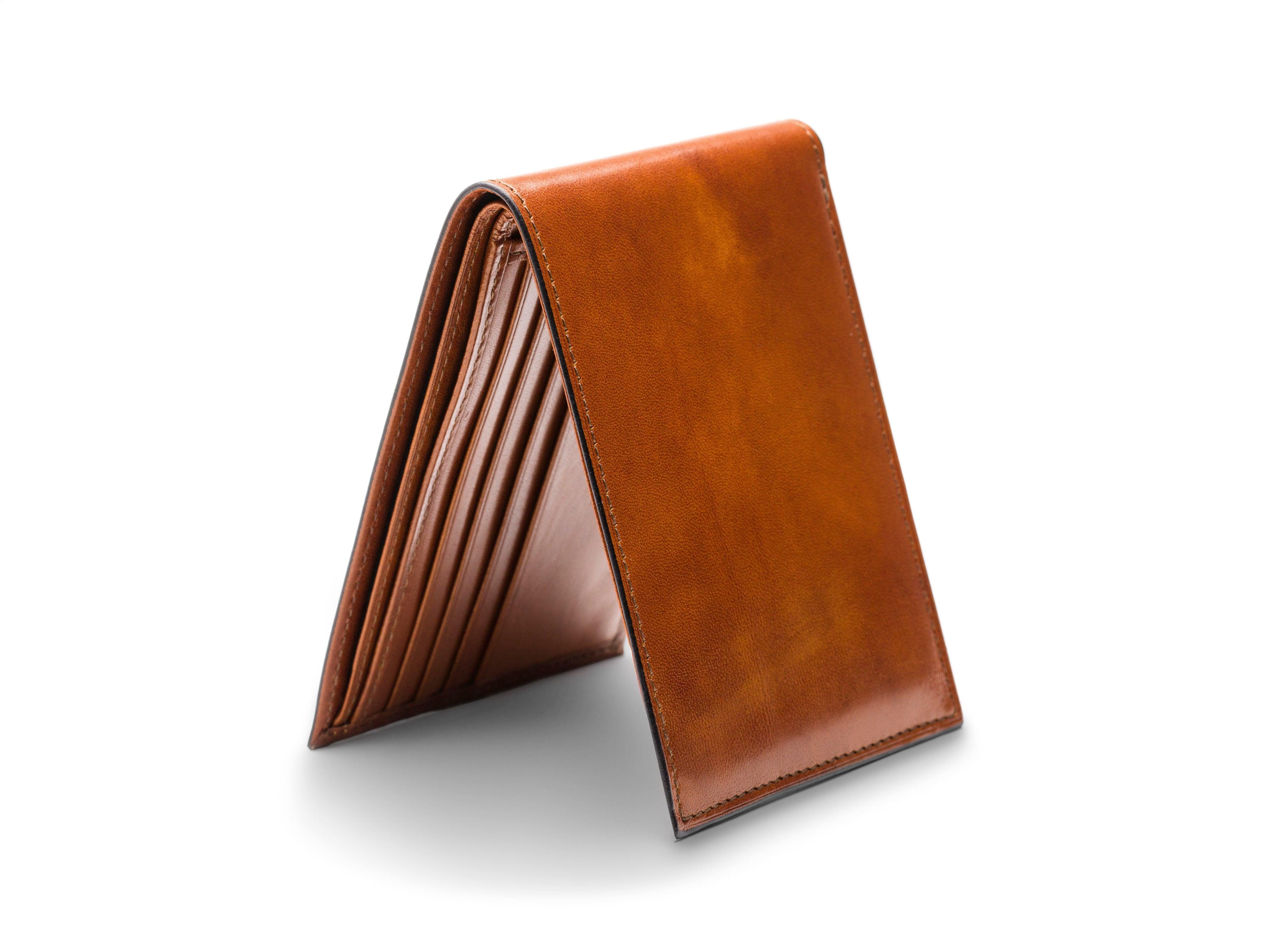
Leather wallet buying works best as a short workflow. First, empty your current wallet and count what you truly use in a normal week. Second, decide whether you want back pocket, front pocket, bag, or travel carry. Third, choose a format that fits that carry style. Fourth, compare leather type, stitching, edges, and dimensions. Fifth, check care instructions before buying so you know whether the material suits your habits.
Leather wallet sizing deserves special attention. Measure the wallet you already own if you like its footprint, or note what bothers you if it feels too bulky. Product photos can hide thickness, so look for loaded photos, measurements, and pocket counts. A wallet with many slots may sound useful, but every extra layer adds height. Leather wallet comfort depends on the filled size, not the empty promise.
Leather wallet color is partly aesthetic and partly practical. Black and dark brown hide stains and fit formal settings. Tan, natural, and cognac shades show patina more visibly. Bright colors and contrast stitching can be distinctive, but they may limit how often the wallet feels appropriate. Hardware, zippers, snaps, and lining colors should be judged for function first, because decorative details can become failure points if poorly made.
When is a Leather wallet worth the price?
Leather wallet value comes from cost per year, daily satisfaction, and reduced replacement. A cheap wallet that peels after one season is not necessarily cheaper than a better wallet used for years. That said, high price does not guarantee quality. Leather wallet buyers should look for transparent material descriptions, strong construction, useful dimensions, and a design that matches real habits rather than chasing prestige alone.
Leather wallet ownership is most rewarding when you treat the item as everyday equipment. Keep it reasonably lean, protect it from harsh moisture and chemicals, and let the surface age naturally. A well-chosen Leather wallet can become easier to use over time because the pockets relax, the surface gains character, and the layout becomes familiar. The practical decision is simple: choose the material, format, and care level you can live with every day.
Leather wallet decisions do not need to be complicated. If you want classic carry, start with a well-built bifold in full grain or top grain leather. If you want less bulk, choose a slim card holder or front pocket wallet. If you need travel organization, choose a longer design with secure compartments. Leather wallet quality is found in honest materials, careful stitching, comfortable size, and care habits that respect the leather rather than fighting it.
Questions and Answers
What makes a leather wallet high quality?
A high-quality leather wallet usually combines strong material, clean stitching, well-finished edges, and a layout that works when loaded. Full grain and good top grain leather are common signs of better durability, but construction matters just as much. Look for even seams, sturdy pocket openings, clear material descriptions, and dimensions that match how many cards and bills you actually carry.
Is full grain leather best for a wallet?
Full grain leather is often a strong choice for a wallet because it keeps the natural outer surface of the hide intact and can develop attractive patina over time. It is not the only good option, though. Top grain, saffiano, nappa, and vegetable-tanned leathers can also work well when sourced and constructed properly. The best choice depends on desired feel, finish, flexibility, and maintenance.
Why do some leather wallets peel or crack quickly?
Leather wallets may peel or crack quickly when they use bonded leather, weak coatings, poor finishing, or construction that cannot handle repeated bending. Overloading the wallet, soaking it, drying it with heat, or using harsh cleaners can also cause damage. A wallet that flakes like a surface film is often failing differently from natural leather patina, which usually darkens and smooths with use.
Should I choose a bifold wallet or a slim card holder?
Choose a bifold wallet if you carry cash, several cards, and want a familiar layout with a bill compartment. Choose a slim card holder if you mostly use a few payment cards, identification, and contactless payments. A leather wallet should fit your routine when full, so compare loaded thickness and pocket access instead of choosing only by appearance.
How do I care for a leather wallet?
Keep a leather wallet dry, avoid overstuffing it, and clean it gently. Start with a soft dry cloth, and use only minimal water for spot cleaning after testing a hidden area. Avoid alcohol, bleach, ammonia cleaners, baby wipes, heavy oils, waxy polishes, and silicone products. If it gets wet, remove contents, blot gently, reshape it, and let it air dry naturally.
Are RFID leather wallets necessary?
RFID leather wallets can be useful for people who want an added barrier around contactless cards, but they are not required for everyone. They do not replace basic habits such as keeping your wallet secure, carrying only necessary cards, and acting quickly if a card is lost. If you choose RFID protection, make sure the wallet still has the size, material, and layout you need.
How long should a leather wallet last?
A leather wallet can last several years or much longer when made from good material and used with reasonable care. Longevity depends on leather type, stitching, edge finishing, pocket stress, moisture exposure, and how much it is overfilled. A wallet carried daily in a back pocket may wear differently than one carried in a front pocket or bag.