Leather wallet guide Is a practical buying and care reference
Leather wallet guide Is a clear way to compare materials, sizes, pocket layouts, durability, and care needs before choosing a wallet. A good leather wallet should fit your daily cards and cash without becoming bulky, feel comfortable in a pocket or bag, and use a leather or leather alternative that matches how you travel, work, and maintain accessories over time.
Leather wallet guide decisions usually begin with one simple question: what do you actually carry every day? Some people need a compact card holder for transit cards, a driver license, and two payment cards. Others need a long continental wallet with a zipper pocket, receipt storage, and room for several loyalty cards. The right answer is not the most expensive wallet or the most feature-heavy wallet. It is the one that makes your routine easier without forcing you to overpack.
Leather wallet guide research also helps separate useful product language from vague luxury claims. Terms such as full-grain leather, top-grain leather, saffiano leather, nappa leather, embossed leather, recycled lining, edge paint, hardware finish, and plant-based leather all point to different performance traits. The more clearly you understand those terms, the easier it becomes to judge whether a wallet is built for softness, structure, scratch resistance, minimalism, or long-term patina.
What is Leather wallet guide for everyday buyers?
Leather wallet guide content is meant to be a practical framework for evaluating wallets before purchase. It explains the details that matter in normal use: material type, stitching, folded thickness, card slot count, coin or zipper storage, closure style, lining, and care instructions. A wallet is a small object, but it is handled constantly, pressed into pockets, tossed into bags, opened at counters, and exposed to moisture, friction, oils, and heat.
Leather wallet guide thinking is especially useful because wallets vary more than they appear to at first glance. A slim bifold may look similar to another slim bifold online, yet one may have tight card slots, one may use a softer leather that stretches quickly, and one may rely on a coating that resists marks but feels less natural. For a new user, those differences become obvious only after several weeks of carrying the wallet.
Leather wallet guide basics apply to both traditional leather and newer alternatives. Calfskin, cowhide, sheepskin, nappa, saffiano, suede, embossed croc patterns, cactus-based materials, and recycled synthetic linings can all appear in wallet construction. None is automatically best. The useful comparison is whether the material suits the purpose: a polished work wallet, a travel wallet, a soft everyday wallet, or a durable accessory that can handle rough bag storage.
How does Leather wallet guide help you compare wallet materials?
Leather wallet guide comparison starts with the surface. Smooth leathers often feel soft and refined, but they may show scratches, pressure marks, and color transfer more easily. Textured leathers, including saffiano-style crosshatch finishes and pebbled grain, usually hide light wear better. Embossed leathers can add visual depth, while nappa leather is often chosen for its smooth hand feel and flexible character.
Leather wallet guide material checks should include finish, structure, and aging behavior. A heavily finished leather may resist water spots and surface scuffs, but it may not develop the same natural patina as less coated leather. A lightly finished leather can feel more organic and may become more personal over time, yet it usually needs more careful handling. This is why care expectations should be part of the buying decision, not an afterthought.
Leather wallet guide shoppers should also notice lining and hardware. A wallet with a center zipper pocket, metal zipper pull, snap, or decorative hardware should open cleanly without catching. Lining should sit flat, pockets should not pucker, and card slots should feel secure without requiring force. Details such as edge paint, folded corners, and even stitching do not guarantee quality by themselves, but they reveal how carefully the wallet was finished.
For a deeper material comparison, readers may want to review a focused before choosing between smooth leather, saffiano texture, natural grain leather, and plant-based alternatives. Leather wallet guide choices become easier when material names are tied to daily behavior instead of treated as decorative labels.
Which Leather wallet guide size should you choose?
Leather wallet guide sizing is about capacity, not just measurements. A wallet that is 6.8 inches wide and 4 inches high can feel slim if it is designed well, while a smaller wallet can feel bulky if the leather is thick and every pocket is stacked in the same area. The best size depends on whether the wallet lives in a front pocket, jacket pocket, tote, crossbody bag, backpack, or travel pouch.
Leather wallet guide advice for minimalists is straightforward: count the items you carry on an ordinary weekday, then add only one or two flexible spaces. If you own a dozen cards but use four, choose a wallet that encourages editing. If you regularly handle cash, coins, receipts, transit tickets, or business cards, a card-only wallet may become frustrating even if it looks clean in product photos.
- Choose a card holder if you carry fewer than six cards and little cash.
- Choose a bifold if you want pocket carry with basic bill storage.
- Choose a zip wallet if loose coins, receipts, or small items matter.
- Choose a long wallet if you prefer unfolded bills and more organization.
- Choose a travel wallet if passport, tickets, or extra cards need one place.
Leather wallet guide sizing should also consider hand feel. A wallet that is technically compact may still be annoying if it is hard to open, cards are difficult to remove, or the zipper rubs against nearby items. In practice, a slightly larger wallet with a sensible layout can feel more efficient than an ultra-slim style that forces awkward stacking.
What wallet layout works best for cards, cash, and travel?
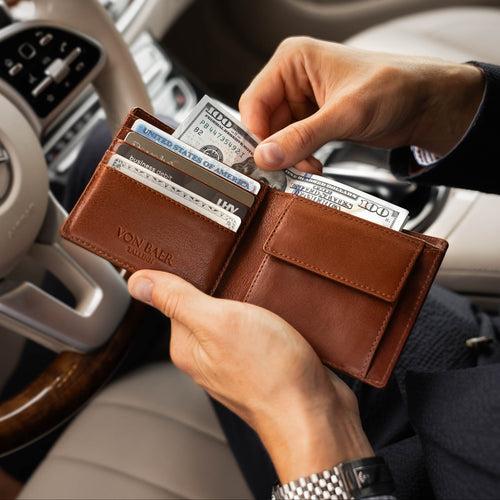
Leather wallet guide layout decisions revolve around access. Horizontal card slots are common because they display card edges clearly and keep cards stable. Vertical slots can increase capacity in a long wallet without making the front panel look crowded. Slip pockets are useful for receipts, folded bills, tickets, or cards that do not need to be visible. A center zipper pocket can hold coins, a key, or small documents, but it adds structure and thickness.
Leather wallet guide buyers should imagine the checkout moment. If your most-used card sits behind several tight slots, the design will feel slower than it looked online. If you travel often, you may want a separate pocket for identification and a secure compartment for emergency cash. If you use mobile payments for most purchases, a slimmer layout with fewer slots may be enough.
Leather wallet guide comparisons are also useful for bags. A long wallet may fit beautifully in a work tote or structured handbag but feel excessive inside a small sling or belt bag. A compact wallet may fit anywhere but may require you to leave behind insurance cards, gift cards, or travel documents. The best layout supports your actual carry system rather than competing with it.
Readers building a lighter everyday carry may find the useful alongside this Leather wallet guide. Slim designs can be excellent, but they work best when the owner is willing to keep contents edited and avoid storing old receipts, expired cards, and duplicate IDs.
How should Leather wallet guide care routines protect the material?
Leather wallet guide care begins with prevention. Keep the wallet away from soaking moisture, direct heat, alcohol-based cleaners, bleach, ammonia cleaners, harsh soaps, and oily products unless the maker specifically recommends them. Many finished leathers need only gentle spot cleaning with a soft cloth and a small amount of water. Testing a hidden area first is a sensible habit because finishes vary widely.
Leather wallet guide maintenance also includes storage. Do not overstuff card slots until the leather stretches permanently. Avoid leaving the wallet under heavy objects, near a heater, in a hot car, or inside a damp gym bag. If the wallet gets wet, blot it gently and let it air dry naturally. Forced heat can make leather stiff, warped, or discolored.
Leather wallet guide care differs by material. Textured, treated leather may be more forgiving of light scuffs, while soft natural-grain leather may show handling and become richer with age. Plant-based leather alternatives can have their own cleaning limits, especially around sensitivity, water exposure, and coating wear. Always check the maker's care instructions because two wallets that look similar may have very different finishes.
Is Leather wallet guide useful for judging durability and safety?
Leather wallet guide durability checks should focus on stress points. Corners, folded edges, zipper seams, snap areas, and card slot openings often show wear first. Look for clean stitching, smooth edges, firm but not brittle structure, and hardware that feels secure. If a wallet already looks uneven or loose before use, everyday friction may make those issues more visible.
Leather wallet guide safety can include physical security as well as digital concerns. A zipper pocket helps keep coins and small papers contained. A wallet that closes securely can reduce the chance of cards sliding out in a crowded bag. RFID-blocking layers may interest users who want extra shielding for contactless cards, though needs vary and users should understand that most wallet safety still comes from careful handling, secure storage, and monitoring accounts.
Leather wallet guide buyers should be cautious about guaranteed claims. No wallet can prevent loss, theft, wear, or every form of card misuse. Smart wallets with trackers, alarms, charging features, or RFID layers may be useful for some people, but they add weight, battery concerns, and electronic failure points. A simple leather wallet can be more reliable for users who value low maintenance.
How does Leather wallet guide compare alternatives and price ranges?
Leather wallet guide comparison should include genuine leather, leather alternatives, nylon, canvas, metal card holders, and synthetic wallets. Leather offers a traditional feel, repair potential in some cases, and a polished look. Nylon and canvas can be light and casual. Metal card holders can be compact and protective, but they may not suit cash or receipts. Vegan and plant-based materials may appeal to buyers who prefer non-animal options, though durability depends on the specific material and construction.
Leather wallet guide pricing is shaped by leather grade, brand positioning, hardware, lining, stitching, finishing, and warranty or service policies. A higher price does not automatically mean a better wallet, and a lower price does not always mean poor construction. The stronger question is whether the wallet's material, capacity, and finish match the way it will be used for the next several years.
| Wallet type | Best fit | Tradeoff |
|---|---|---|
| Card holder | Minimal daily carry | Limited cash and receipt space |
| Bifold | Balanced pocket use | Can thicken when overfilled |
| Zip wallet | Coins and small-item security | Zipper adds weight and bulk |
| Long wallet | Organization in bags | Too large for many pockets |
Leather wallet guide evaluation is strongest when it compares tradeoffs instead of chasing a universal winner. A formal work wallet, a travel wallet, and a weekend card holder are different tools. Many people eventually keep two wallets: one slim option for light carry and one larger wallet for travel, errands, or days when extra organization matters.
How do you get started with Leather wallet guide buying decisions?
Leather wallet guide shopping can follow a simple workflow. First, empty your current wallet and remove anything expired, duplicated, or rarely used. Second, count the items that remain. Third, decide whether the wallet must fit in a pocket or mainly in a bag. Fourth, choose the material family that matches your tolerance for scratches, patina, and cleaning. Fifth, compare layouts instead of relying only on color.
Leather wallet guide buyers should read product dimensions carefully and compare them with a wallet they already own. Width, height, and depth matter, but the loaded thickness matters more. If the product page shows card slot count, zipper pockets, vertical slots, slip pockets, and lining material, use those details to picture daily use. Reviews can help identify whether slots loosen, corners rub, hardware scratches, or the finish resists normal wear.
Leather wallet guide judgment should end with a realistic care commitment. If you do not want to think about delicate finishes, choose a more structured or textured option. If you enjoy leather that softens and shows character, a smoother natural-grain wallet may be satisfying. If you want a non-animal option, compare plant-based and synthetic materials for water resistance, feel, and long-term wear rather than relying on the word alternative alone.
Why Leather wallet guide still comes down to everyday use
Leather wallet guide decisions are personal because a wallet is both functional and tactile. It holds private essentials, appears in public moments, and is handled many times a day. The best wallet should make those moments simpler: cards come out cleanly, cash has a place, the material feels right, and the size does not fight your pocket or bag.
Leather wallet guide principles point to a practical final test. Choose the smallest wallet that comfortably carries what you truly need, made from a material you are willing to care for, with a layout that matches your daily rhythm. When a wallet meets those conditions, color, hardware, and style become enjoyable refinements rather than distractions from function.
Leather wallet guide buying is not about finding a perfect object for every person. It is about understanding tradeoffs before spending money, so the wallet you choose feels useful on the first day and still makes sense after months of real handling, storage, travel, and routine use.
Questions and Answers
What should I look for first in a leather wallet?
Start with capacity and daily fit. Count the cards, cash, IDs, and small papers you actually carry, then choose a wallet shape that holds them without overstuffing. After that, compare leather type, stitching, lining, zipper quality, and closure style. A good wallet should make cards easy to access while staying comfortable in your pocket, bag, or travel pouch.
Is saffiano leather good for a wallet?
Saffiano-style leather can be a strong wallet choice for people who want a structured, textured finish that hides light scratches better than many smooth leathers. It often feels more polished than casual fabrics and can handle regular use well. The tradeoff is that it may feel less soft or natural than nappa or lightly finished leather, so the best choice depends on your preferred feel.
How many card slots does a good wallet need?
A good wallet needs only enough card slots for your normal routine, plus one or two flexible spaces. Many people can use four to eight slots comfortably, while travel or long wallets may need more. Too many slots can encourage overpacking, which stretches leather and adds bulk. The better measure is whether your most-used cards are secure and easy to remove.
How do I care for a leather wallet safely?
Keep a leather wallet away from soaking moisture, direct heat, alcohol, bleach, ammonia cleaners, harsh soaps, and oily products unless the maker specifically recommends them. For light marks, use a soft cloth and a small amount of water, testing a hidden area first. Let damp leather air dry naturally, and avoid overstuffing card slots because stretched leather may not fully recover.
Are slim leather wallets better than larger wallets?
Slim leather wallets are better if you carry a small number of cards and little cash, especially in front pockets or small bags. Larger wallets are better for receipts, coins, unfolded bills, travel documents, or stronger organization. Neither is automatically superior. The right choice depends on what you carry, where the wallet will sit, and how often you need quick access.
Do RFID wallets make a leather wallet safer?
RFID-blocking layers may add reassurance for users concerned about contactless card scanning, but they do not replace careful wallet habits. Physical security, secure storage, account monitoring, and keeping only necessary cards with you are still important. If RFID protection matters to you, compare it as one feature among material quality, layout, durability, and comfort rather than the only deciding factor.
What is the difference between smooth leather and textured leather wallets?
Smooth leather wallets often feel softer and more refined, and some develop a visible patina over time. They may also show scratches, pressure marks, and color transfer more readily. Textured leather wallets, such as pebbled or saffiano-style finishes, usually disguise minor wear better and can feel more structured. Your choice should match how carefully you handle accessories and the look you prefer.